Teaching Handmade Jewelry since 1974
Jewelry Arts Inc is the only school in the world dedicated exclusively to handmade ancient jewelry making techniques — including Etruscan granulation, Byzantine chain making, cloisonné enameling, and high-karat goldwork.
The school began as the Kulicke–Stark Academy of Jewelry Arts, founded in 1974 by Robert Kulicke, a painter and frame maker, and his goldsmithing partner Jean Stark. Kulicke, frustrated by the secrecy that often surrounds the jewelry world, made it his mission to teach — not guard — the nearly lost techniques of ancient jewelry. His motto was simple and revolutionary: “Never keep a secret.”
Together with their apprentices, including Fredrika Kulicke, Joe English, Susan Reinstein, Claire Besani, Bessie Jamieson, Louise Parrish, Myron Bikakis, and Nanci Modica, Kulicke and Stark reverse-engineered the alloys, chains, and stone settings of classical goldsmiths. They created a community where ancient processes were re-learned, practiced, and openly taught to thousands of students from around the world.
In 1987, Kulicke turned his focus back to painting and handed the school over to Bessie Jamieson, who reincorporated it as Jewelry Arts Institute. She directed and taught at the school for over 20 years — faithfully carrying forward Kulicke and Stark’s founding vision while growing the studio community and keeping ancient techniques alive at the bench.
In 1992, a new student, Jeanette K. Caines, began studying ancient techniques at Jewelry Arts under the same “never keep a secret” ethos. After completing her apprenticeship and teaching for many years, she became Director in 2009 and owner in 2017. Under her leadership, Jewelry Arts Inc has expanded its reach through digital education, ongoing research that has broadened the scope of ancient techniques now taught at the school, and the creation of the Dr. Goldsmith membership program — all while preserving the hands-on, bench-based instruction that has defined the school since its founding.
We continue today in the spirit of exploration, adding new skills and new school projects constantly.
Jewelry Arts specializes in one-one instruction, with a team-teaching approach that results in a student-teacher ratio of 5 to 6 to 1. All instructors are highly trained and experienced jewelers and teachers. Instructors work with students at each step of production and are thoroughly equipped to discuss and demonstrate techniques and help solve problems encountered by students at all levels.
ON THE 50TH ANNIVERSARY OF THE JEWELRY ARTS INSTITUTE BY BESSIE JAMIESON
IN about 1970 I met a remarkable man! He was a painter, framemaker, and an aspiring classical goldsmith!
Bob Kulicke had a small studio on the upper west side of Manhattan where he worked with other artists to create cloisonné enamels based on their paintings.. Bob was a painter and painted small still lives of fruits and flowers. He was particularly famous for his paintings of pears, and he made many enamels with a pear as the main subject. But then these pears needed to be set so that they could be displayed or become a wearable piece of jewelry. So he began delving into the history of jewelry, particularly ancient jewelry made by the Etruscans, Romans, Greeks starting thousands of years BC. In 1974 he and his partner Jean Stark took adjoining space to the original studio, calling the school Kulicke Stark Academy of Jewelry Arts, and with friends, family, and other aspiring goldsmiths they began studying the techniques used in that jewelry ,developing a similar alloy of gold that the ancient goldsmith used, an alloy of 22k gold that was used in the many different chains and settings that could be seen in the Byzantine collection in the Metropolitan Museum and in other museums and books of jewelry collections. With their apprentices, they researched and figured out how to emulate the techniques of chain making and granulation and settings of gemstones seen in Classical jewelry so they could teach the processes to eager students who came from all over the country and often from other countries. These apprentices included Fredrika Kulicke, Joe English, Susan Reinstein, Claire Besani, Bessie Jamieson, Louise Parrish, Myron Bikakis, Nanci Modica as well as thousands of people who came through the school over the last 50 years. One of the mottoes Kulicke instilled in his apprentices was to NEVER KEEP A SECRET. The success of the school was built on this motto. Apprentices who became teachers were sworn to this ideal, and while creating their own pieces, selflessly taught the students whatever they were capable of.
Jean Stark left the school around 1984 and In 1987, Bob Kulicke decided to concentrate on his painting and framing , handing over the school to me. I reincorporated the school as the Jewelry Arts Institute and continued to teach classes and run the school and make my own jewelry pieces for the annual show I had at Davis and Langdale Gallery from 1979 to 2009. We moved twice during that time, once down the hall from the original Kulicke studio, and the next time 2 blocks away to the corner of West 77 St. and Broadway where I continued to direct the school and teach aspiring goldsmiths until I sold it in 2009. One of the apprentices at this time, from 1992, was Jeanette K Caines, a master goldsmith who became the director of the school after I left, and who has carried on the tradition of teaching the techniques of classical goldsmithing to this day.
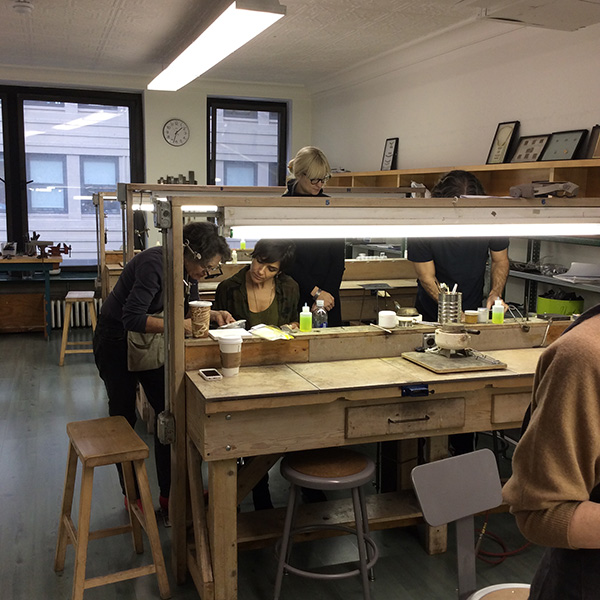
Why isn’t there a set curriculum?
The primary reason we don’t have a set class curriculum is you. It was clear to the founders of JAI in 1974 (as it is to us today) that a set curriculum only benefits the teacher. Having all students do exactly the same thing, at the same time, regardless of their comprehension level is not good for students. It leaves beginner students lost and more advanced students bored. Every student learns at their own pace, so that is how we teach you. We have one teacher for every 4-6 students so each student gets individualized attention and can work on the jewelry projects that spark their interest. We strive to provide the very best learning experience for each student and that means letting you create at your own pace.
Our studio at Jewelry Arts is fully equipped to facilitate your learning experience. There is one kiln and one Smith acetylene torch for every two students. All of our rolling mills, hammers, drawplates, lapidary equipment, draw benches, flexible shafts, anvils, and grinding and polishing equipment are free for student use. Lockers are available for a rental fee. We also provide free wireless internet access. To-the-trade stone dealers are available.
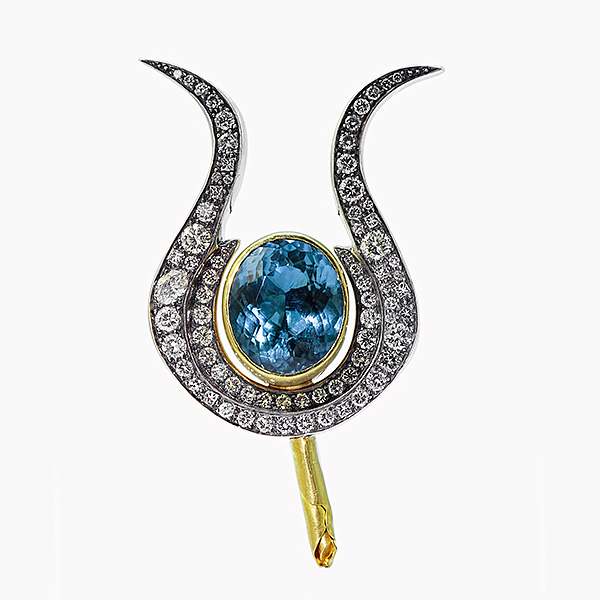
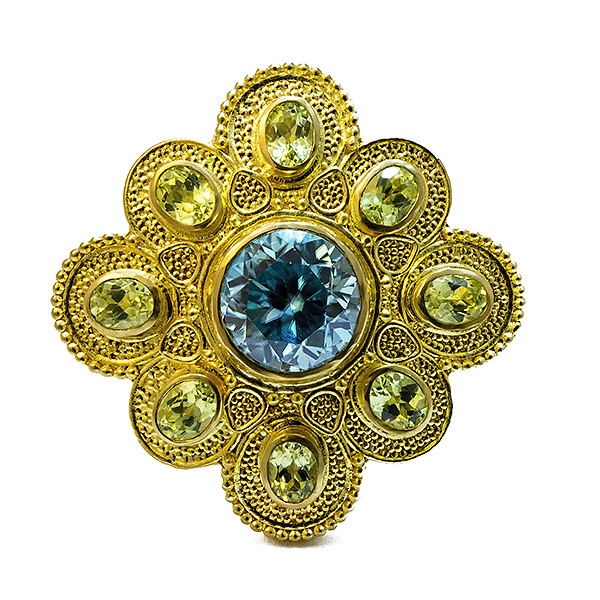
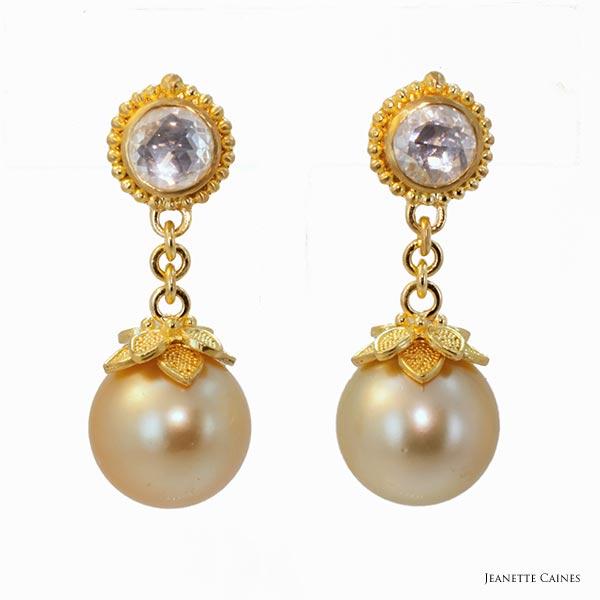
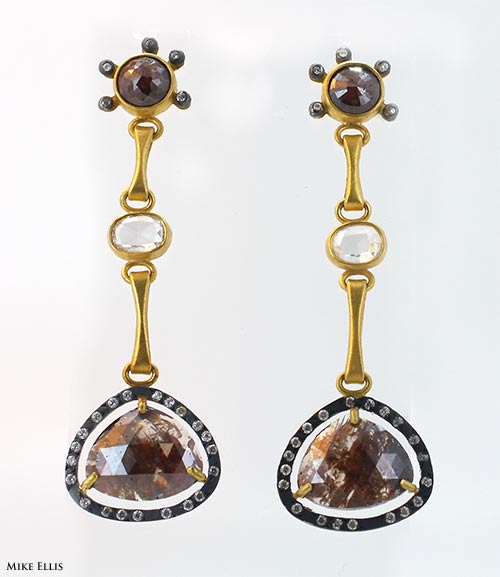
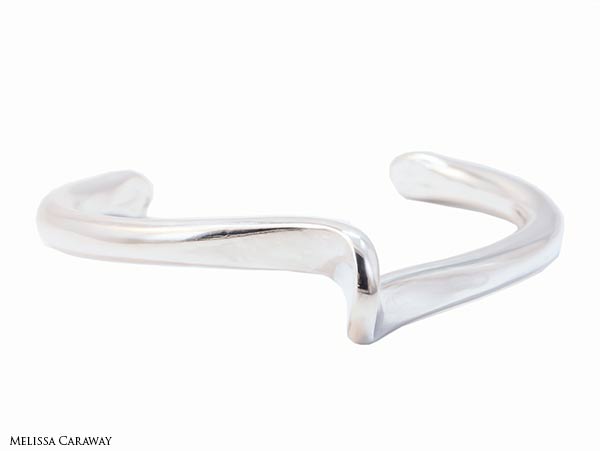
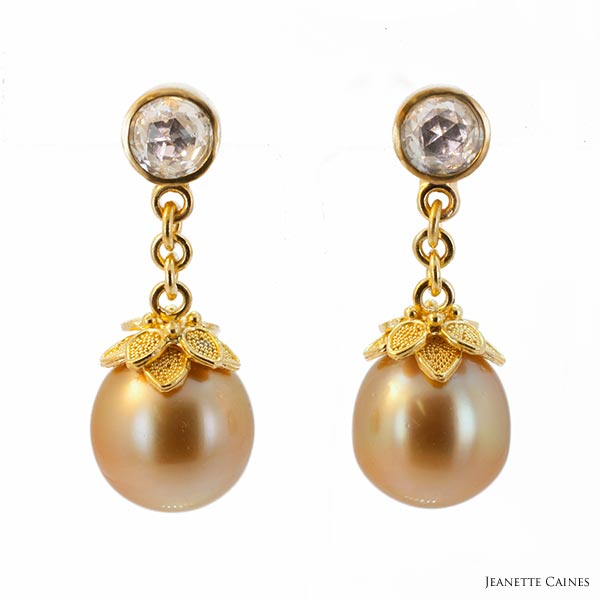
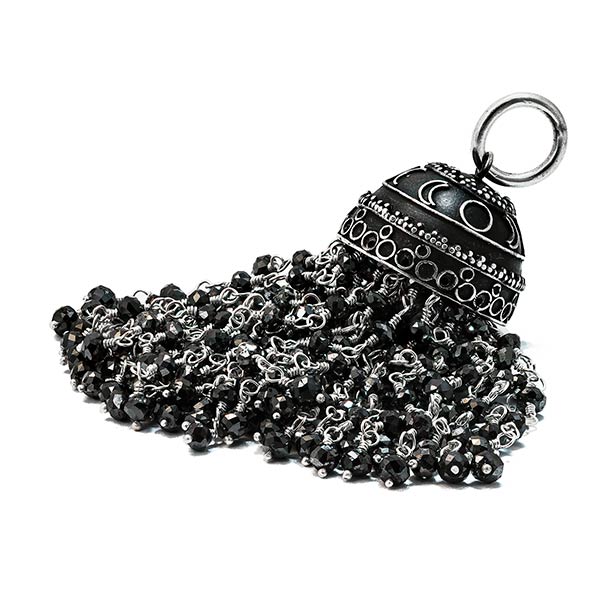
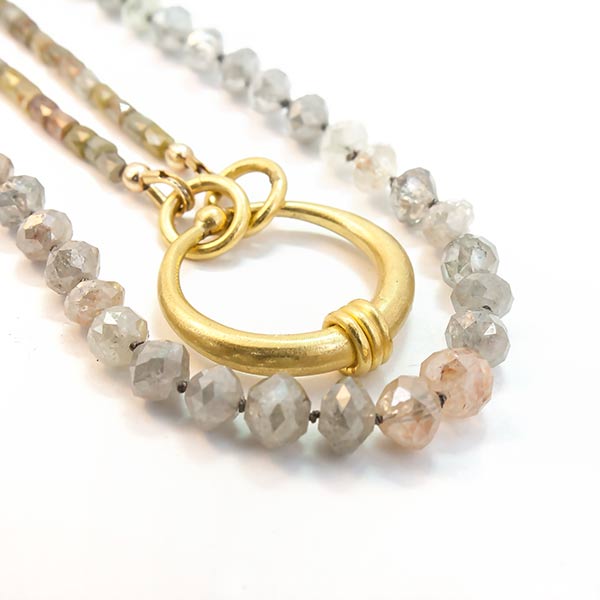
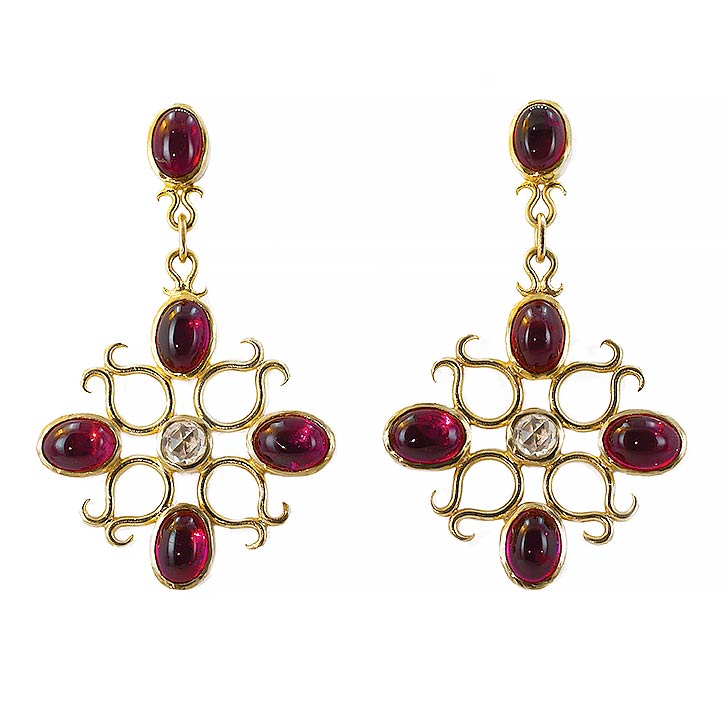
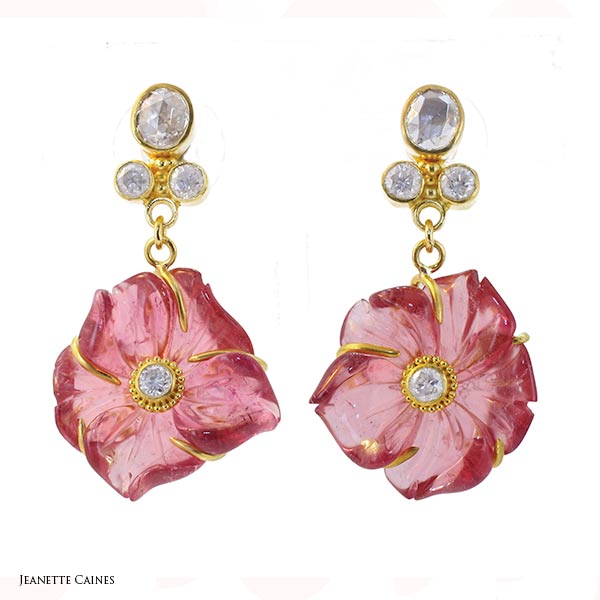
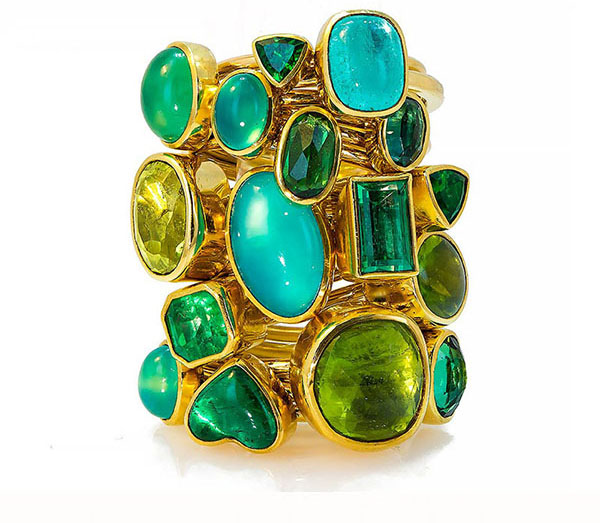
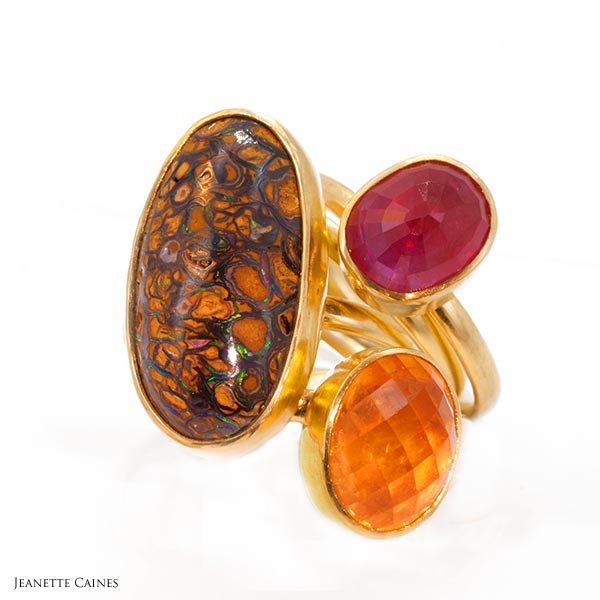
Examples of Our Instructor’s Jewelry